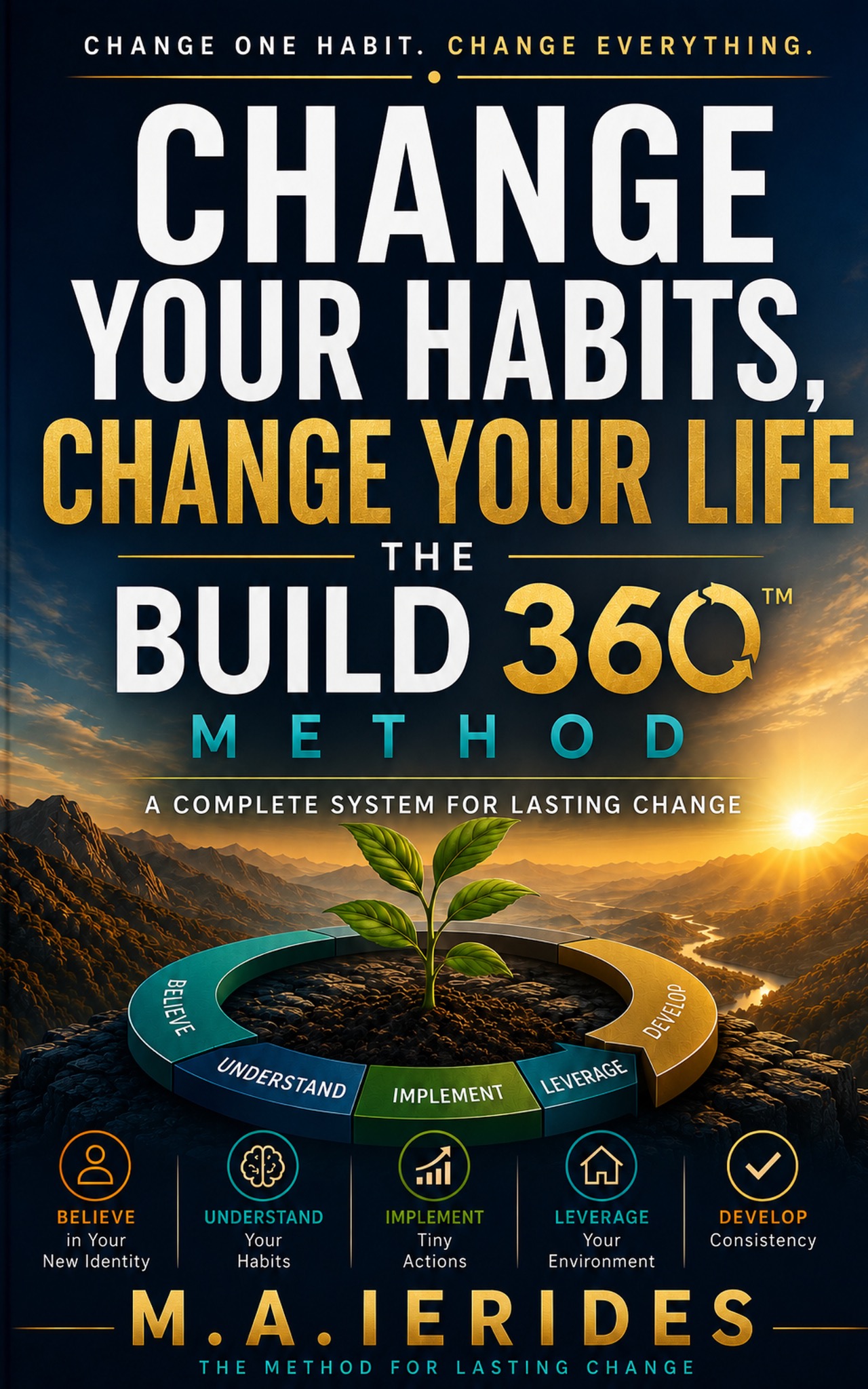
The problem is often the design, not the person
When a habit fades, people often interpret it as a failure of discipline. That conclusion is attractive because it is simple, but it hides the more useful question: what made the desired action difficult to repeat?
A habit is not built in a vacuum. It competes with tiredness, interruptions, existing routines, unclear cues, and rewards that arrive later than the effort. Strong intentions can start a behaviour. A workable design is what allows it to continue.
Try this today
Run a friction check
- Name the exact action you intended to repeat.
- List what usually happens immediately before it.
- Circle every point where a choice, delay, or extra preparation is required.
- Remove or simplify one of those points before your next attempt.
Make the entry point smaller than your resistance
A small starting action is not a lesser ambition. It is a reliable doorway into the behaviour. If your plan requires forty minutes, perfect equipment, and high energy, the plan has created several opportunities to say no.
Define a minimum version that still counts: open the document and write one sentence; put on your shoes and walk for five minutes; prepare one healthy component of tomorrow’s lunch. The minimum keeps the habit going. On good days, you can naturally do more.
Attach the habit to something real
“I will do it later” has no dependable place in a day. A useful cue is specific and already present: after I make my morning coffee, when I close my laptop for lunch, or before I brush my teeth at night.
Choose a cue you can observe, not a time you often miss. Then keep the action close to that cue in both time and place. Repetition becomes easier when the environment carries part of the remembering for you.
Try this today
Write one implementation sentence
- After I [existing action]…
- I will [minimum version of the new habit]…
- In [specific place]…
- If the normal cue is disrupted, my backup cue will be [alternative].
Plan the return before you need it
The most resilient habit is not the one that is never interrupted. It is the one with a clear route back. Travel, illness, deadlines, and emotional strain are part of life. Treating them as exceptions to the plan makes the plan fragile.
Decide now what you will do after a missed day. The return action should be small and immediate. This prevents one interruption from becoming a new identity story about being inconsistent.
Professional perspective
A habit is a small operating system
An engineering system is judged by how it performs under expected variation, not only under ideal conditions. A habit should be judged the same way. Motivation, available time, location, and energy will vary; the design must specify how the behaviour begins, what minimum preserves its purpose, and how it returns after interruption.
This shifts the review away from personality. When repetition fails, inspect the cue, preparation, competing action, size, feedback, and recovery rule. Change one important variable and test again. The aim is not mechanical perfection but a design that remains understandable when life becomes less predictable.
Applied example
Applied example: protecting the purpose during a demanding week
Suppose the intended habit is a thirty-minute morning review that creates direction for the day. During a week of early meetings, insisting on the full format creates repeated failure. Abandoning it removes the benefit exactly when the week needs clarity.
A reduced mode keeps the same cue—the first drink of the morning—and preserves three decisions: today's main result, the first action, and one responsibility that must not be forgotten. The full review returns on the next ordinary day. The format adapts while the function stays intact.
This illustrative scenario explains the decision process; it is not a promise of results.
Four-point review
Questions that improve the next decision
Can I observe the cue?
A vague intention has no dependable entry point.
Is the first action already prepared?
Hidden setup increases friction at the weakest moment.
What is the valid minimum?
A reduced mode protects continuity without pretending capacity is unchanged.
What happens after a miss?
A recovery rule prevents one disruption from creating a new decision.